Planning Smarter: AI in a Hands-On FCS Classroom
What AI handles behind the scenes so hands-on, skill-based learning stays front and center.
Jessica Hoffmann
3/3/20263 min read
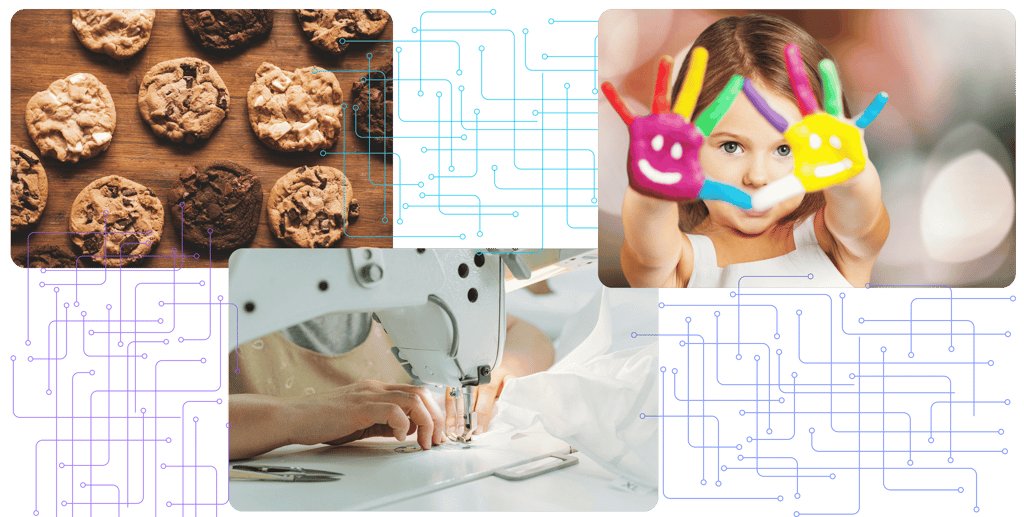
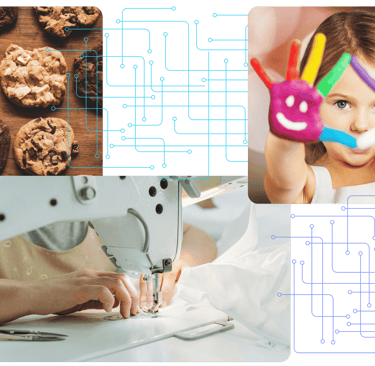
I teach sewing, cooking labs, childcare, and career exploration to 7th and 8th grade students. My classroom is hands-on, skill-driven, and built for doing — not just discussing.
Every day, my students measure ingredients, thread needles, practice safety procedures, and connect what they’re learning to real career pathways.
When people talk about AI in education, they often imagine essays or research papers. But Career and Technical Education classrooms look very different. The learning in my room happens with tools, materials, movement, and collaboration. So the question I’ve had to answer isn’t whether AI belongs in a hands-on classroom — it’s how it can support one without getting in the way.
For me, AI lives almost entirely behind the scenes.
Streamlining Recipe Planning - One of the biggest ways I use it is for recipe scaling. If you’ve ever planned a cooking lab for dozens of kitchen groups, you know how much time goes into adjusting quantities, converting measurements, and calculating bulk purchasing needs. That planning used to take far longer than I wanted to admit. Now, I can scale recipes quickly, adjust for different equipment setups, and estimate ingredient totals much more efficiently. My students still practice measuring and precision themselves; they just don’t see the hours of math that used to happen before class even began.
Supporting English Learners- I use AI in a similar way when supporting English learners. Clear instructions are critical in a lab setting, especially when safety is involved. I often use AI to help rewrite complex directions into more accessible language, generate bilingual vocabulary previews, or create sentence stems that support academic discussion. The expectations stay the same, but the pathway into the learning becomes clearer. Instead of lowering rigor, I’m removing barriers that have nothing to do with the actual skill being taught.
Strengthening Career Connections- Career exploration is another area where AI helps me think faster. In Family and Consumer Sciences, we connect everyday skills to real professions — culinary arts, personal care services, early childhood education, and human services. Sometimes I need a quick scenario card, a role-play prompt, or a simplified resume example that fits a middle school audience. AI can generate a starting point in seconds. From there, I refine, adjust, and align everything to my standards and students. It speeds up brainstorming, but the instructional decisions remain mine.
Clarifying Lab Safety- Even something as straightforward as lab safety benefits from this support. Safety contracts and procedures are essential, but they don’t need to be written in dense, formal language. I use AI to help clarify expectations, draft parent communication more efficiently, and create short comprehension checks to reinforce procedures. Clearer language leads to better understanding, which ultimately supports a safer learning environment.
What AI Doesn’t Do- What AI does not do in my classroom is just as important. It does not sew the pillow, cook the meal, or build the relationships that make a classroom function. It doesn’t guide collaboration, model patience, or notice when a student needs extra encouragement. Those parts of teaching remain entirely human.
In a classroom built around real tools and real skills, time is one of the most valuable resources I have.
When AI streamlines the preparation process, it gives me more space to focus on feedback, differentiation, and student connection. The hands-on learning remains exactly where it belongs — at the center of the experience — while AI works quietly in the background to make that learning stronger.
Thanks for reading. If you’re exploring how AI can support your classroom without replacing the parts that matter most, you’re in the right place. I’ll be sharing more examples of how I’m designing with AI while keeping learning hands-on and human.
Jessica Hoffmann
Middle School FCS Teacher | Learning Technologies Graduate Student | Founder of AIdeas Lab